
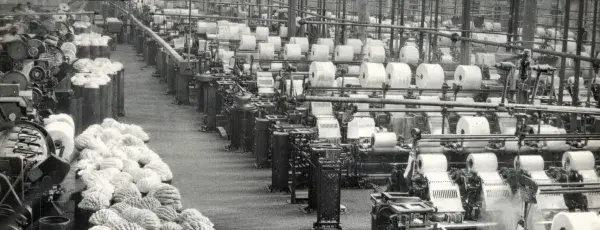




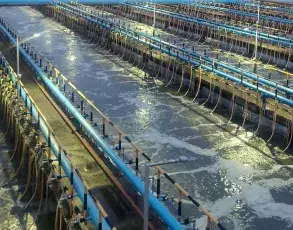










The environmental dimension of ESG considers our use of natural resources and how our activities, both directly and via its supply chains, affect the environment. Our key inputs that interact with the environmental dimension are – Fibre, Water, Energy, Chemicals and Waste. An additional layer of environmental risk is added by climate change.
Environment Management Systems
In alignment with our ESG policy, we are committed to operating in a sustainable and responsible manner. This is the evident from the environment management systems we have deployed at our manufacturing facilities based on ISO14001 standard and covers all aspects of your operations, including water management, energy management, waste management, air quality management.
We are committed to continuous improvement of your EMS and regularly review our environmental performance. Our EMS systems are verified through international standards and also audited by specialised third-party verification companies.
Download: ISO 14000 Certificate | Verified Higg FEM certificate
Decarbonisation
Environment Management Systems alone cannot support in achieving better environmental performance and dealing with the impacts of Climate Change. Decarbonisation is the key to sustainable future.
Climate Change
Climate Change risk has the potential for adverse effects on lives, livelihoods, health status, economic, social and cultural assets, ecosystem services and infrastructure. The impact of the climate risks i.e. physical and transitional risk are felt through micro-economic and macro-economic transmission channels coupled with source of variability.
To be proactive in managing climate change, we undertook a qualitative analysis of two physical scenarios (RCP 2.6, RCP 8.5) and two transition scenarios (IEA 2DS, IEA STEPS) to understand the resilience of our approach to climate change. This enabled us to evaluate our current standing and devise a localized & context specific adaptation plan to proactively respond to the risks and leverage available opportunities.
Physical Climate Risk Adaptation Plan
In the physical scenario, Arvind being a textile player faces risk majorly due to its dependence on raw material, water use, energy efficiency, logistics, etc. Thus our adaptation strategy is focused on these risks. A key initiative that we are taking as part of this is strategy is strengthening our sustainable raw material portfolio by directly sourcing sustainable cotton from farmers which are practicing BCI, Organic and Regenerative Agricultural practices.
For further details on refer to our Physical Climate Risk Adaptation Plan and for Climate Risk & Opportunities refer the Climate Risk Management chapter in our Sustainability Report.
Energy Consumption
Understanding the energy consumption is the first step towards reducing emissions. The source and quantum of energy we consume significantly determines the sustainability of our organisation. We are relentlessly monitoring our energy use and greenhouse gas emissions to devise strategies to reduce our carbon footprint. The current status of renewable and non-renewable sources in our energy mix is shown below:
Total Energy Consumption | Unit | 2022-23 | 2023-24 | 2024-25 |
|---|---|---|---|---|
Total non-renewable energy consumption | MWh | 11,97,916 | 12,81,310 | 11,04,979 |
Total renewable energy consumption | MWh | 3,79,196 | 4,15,823 | 6,53,713 |
Note: We have restated historical energy and emissions to reflect an expanded organizational boundary that includes subsidiaries, removal of double counting, and improved data availability. These revisions align our inventory boundary with that used for our Science Based Targets initiative (SBTi) commitments. Accordingly, figures from 2021 onward are presented on a comparable basis with our targets and may differ from values published previously. Our SBTi targets were formally approved in August 2025.
Read the Assurance Statement with Intertek's independent opinion.
We are progressively reducing our dependence on fossil fuels and increasing the proportion of renewable energy in our energy mix to steer our decarbonisation journey.
highlights

approved Scope 1, 2 and 3
Science Based Targets
65.23MW
total current renewable energy generation capacity across facilities

Switch from coal
by creating a backward supply chain of biomass briquettes and installing biomass based boiler
Greenhouse Gas Emissions
Arvind, being an integral part of the textile & apparel industry, is contributing to limit global warming to well below 2, preferably to 1.5 degrees Celsius, compared to pre-industrial levels by reducing our greenhouse gas emissions. We have committed to the Science Based Targets Imitative and are in the process to set our SBTi targets.
The current status of our Direct (Scope 1) and Indirect (Scope 2) greenhouse gas emissions is shown below:
Direct and Indirect Emissions
Greenhouse Gas Emissions | Unit | 2022-23 | 2023-24 | 2024-25 |
|---|---|---|---|---|
Direct GHG emissions | MTCO2e | 2,67,335 | 3,19,036 | 2,58,754 |
Indirect GHG emissions | MTCO2e | 1,84,481 | 1,87,028 | 1,89,283 |
Indirect GHG emissions | MTCO2e | 1,83,381 | 1,48,297 | 1,41,871 |
Indirect GHG Emissions | MTCO2e | 17,75,320 | 11,03,976 | 13,16,461 |
Break up of Indirect GHG emissions from value chain (Scope 3)
Category | Description | 2022-23 |
|---|---|---|
1 | Purchased Goods and Services | 3,08,014 |
2 | Capital Goods | 5,263 |
3 | Fuel and energy-related emissions not included in Scope 1 or 2 | 74,850 |
4 | Upstream Transportation and Distribution | 68,697 |
5 | Waste Generated in Operations | 10,036 |
6 | Business Travel | 2,675 |
7 | Employee Commuting | 41,724 |
8 | Upstream Leased Assets | 147 |
9 | Downstream Transportation and Distribution | 2,60,294 |
10 | Processing of sold products | 5,864 |
11 | Use of sold products | 1,01,158 |
12 | End-of-life treatment of sold product | 4,35,572 |
13 | Downstream leased assets | 0 |
14 | Franchises | 1962 |
15 | Investments | 204 |
Note: We have restated historical energy and emissions to reflect an expanded organizational boundary that includes subsidiaries, removal of double counting, and improved data availability. These revisions align our inventory boundary with that used for our Science Based Targets initiative (SBTi) commitments. Accordingly, figures from 2021 onward are presented on a comparable basis with our targets and may differ from values published previously. Our SBTi targets were formally approved in August 2025.
Read the Assurance Statement with Intertek's independent opinion.
Net Zero Commitment and Emission Reduction Targets
Arvind Limited is committed to driving a low-carbon transformation across its operations and value chain. Our decarbonization journey is anchored in the Science Based Targets initiative (SBTi), aligning our ambition with the 1.5°C pathway and the SBTi Corporate Net-Zero Standard. Both our near-term and net-zero targets were officially validated by SBTi in August 2025, reaffirming our leadership in climate action and long-term sustainability.
Near-Term Targets (Approved by SBTi)
Arvind commits to reduce:
- Scope 1 and 2 absolute GHG emissions by 63% by FY 2034, from an FY 2019 base year.
- Scope 3 absolute GHG emissions by 40% by FY 2034, from an FY 2022 base year.
These near-term targets include land-related emissions and removals from bioenergy feedstocks, reflecting Arvind’s commitment to a holistic emissions boundary.
Long-Term and Net-Zero Targets (Approved by SBTi)
Arvind commits to reach net-zero greenhouse gas emissions across its value chain by FY2050. To achieve this, we aim to:
- Reduce Scope 1 and 2 absolute emissions by 90% by FY 2045, from the FY 2019 baseline.
- Reduce Scope 3 absolute emissions by 90% by FY 2045, from the FY 2022 baseline
For more details refer to Arvind Net Zero.
Net Zero Strategy for Scope 1, 2 & 3
Arvind’s Net-Zero Strategy focuses on achieving deep, sustained emission reductions through innovation, operational excellence, and value-chain collaboration. The strategy builds on initiatives that are already implemented or under execution, structured around four pillars:
- Energy Transition and Decarbonization: Phasing out coal and shifting to biomass and renewable energy, expanding solar capacity, and advancing energy efficiency and heat recovery across facilities.
- Sustainable Materials and Circular Value Chains: Scaling use of recycled and regenerative fibers, strengthening waste reduction and recycling systems, and partnering with suppliers for low-carbon sourcing.
- Water and Process Optimization: Implementing ZLD and digital water systems to cut process emissions and resource use, alongside supercritical CO₂ dyeing and other cleaner technologies.
- Innovation, Collaboration, and Carbon Governance: Driving R&D-led decarbonization projects, applying internal carbon pricing, and deepening supplier engagement to address Scope 3 emissions.
Neutralization and Beyond-Value-Chain Mitigation
In the final phase of Arvind’s net-zero journey, the company intends to neutralize residual emissions and further contribute to global climate mitigation through:
- Offsetting: Purchasing verified carbon credits from credible, science-aligned projects that deliver measurable carbon avoidance or sequestration benefits.
- Investing in Permanent Carbon Removal: Arvind has been implementing tree plantation programs for several years to enhance carbon sequestration and biodiversity. We have recently piloted biochar production and application, exploring its potential as a durable carbon sink. Going forward, Arvind aims to scale such nature-based and technological removal solutions, including afforestation, biochar, and carbon capture technologies.
Through these actions, Arvind ensures that residual emissions are addressed responsibly - only after all feasible reductions are achieved - aligning with the SBTi Net-Zero Standard and ensuring a transparent, science-driven pathway to climate neutrality.
For more details, refer to our Integrated Annual Report and the Sustainability Report.
Our Performance
Arvind continues to make steady progress toward its science-based emission reduction targets, achieving reductions. Our performance for current year is shown below:
Type | Emission | Baseline | Base | Near Term | Target for | Actual |
|---|---|---|---|---|---|---|
Absolute | Scope 1 | 3,83,462 | 2019 | 63% by 2034 | 3,02,935 | 2,58,754 |
Absolute | Scope 2: | 1,85,708 | 2019 | 1,46,709 | 1,41,871 | |
Absolute | Scope 1 + 2 | 5,69,170 | 2019 | 63% by 2034 | 4,49,644 | 4,00,625 |
Absolute | Scope 3 | 17,75,320 | 2022 | 63% by 2034 | 16,56,965 | 13,16,461 |
Circular Fashion
Designing right products in a ‘fundamentally right’ manner is integral to Arvind’s way of doing business. Our focus on material issues and efforts to integrate sustainability cover the entire life cycle of the product – from raw materials used, product development, and manufacturing, to product use and subsequent recycling.
As part of our Circular Fashion Initiatives, in order to design Low Carbon Products we are taking a number of initiatives, including:
- Using recycled materials: We uses a variety of recycled materials in its products, including recycled cotton, polyester, and nylon.
- Sourcing sustainable materials: As cotton is our key raw material, we have invested in promoting Regenerative, organic and Better Cotton agriculture. We also uses other sustainable materials, such as Tencel, Hemp, etc.
- Integration of renewables in our electricity mix: We have implemented a number of measures to integrate renewables, such as setting up solar rooftop, wind-solar hybrid, etc
Circular Fashion Indicator
Indicator | 2024-25 |
|---|---|
Total weight of recycled post-consumer textile fibers included | 641.64 |
Total weight of items sold (tonnes) | 1,11,241 |
Biodiversity
The effect of the textile industry on climate change has received ongoing attention. Less well recognised is that textile has a tremendous cost to biodiversity. The destruction of soil, alteration of natural ecosystems, and contamination of waterways are all intimately related to the supply chains for textile.
For driving effective governance mechanism, monitoring nature-related risks & opportunities, and integrating biodiversity in Arvind’s businesses strategy we have established the following guiding principles:
- Identification of business-biodiversity nexus for Arvind
- Understanding the impact & dependencies
- Assessing the risks & opportunities
- Responding to the risk & opportunities
Biodiversity Risk Assessment
Biodiversity is a complex and multidimensional landscape, its interaction varies across each part of the textile value chain. Each value chain actor contributes to the five main direct pressures that constitute major threats to biodiversity.
We conducted a biodiversity risk assessment for our own operations and the value chain to understand our impact and dependencies on these five direct pressures. This then guided our identification of risk and opportunities.
From the biodiversity related risk and opportunities, we have devised actions as per the AR3T framework, and some of them are:
- Move to deforestation-free supply chains i.e. raw materials sourced from existing managed landscapes for agriculture or forestry activities.
- Restore the productivity of agricultural land using regenerative agriculture practices, thus reducing the need to expand to newer areas.
- Work with certification standards to include biodiversity-related criteria as part of the standards.
For more details related to indicator used for measurement, description of impacts and their relevance to various pressure drivers refer to our Biodiversity Strategy.
Targets
Indicator | 2022-23 | 2023-24 | 2024-25 |
|---|---|---|---|
Proportion of sustainable cotton sourced (%) | 61% | 87% | 72% |
The proportion of chemicals sourced compliant | 99% | 98% | 98% |
The proportion of facilities not using freshwater | 44.84% | 100% | 100% |
Proportion of industrial effluent discharged | 5% | 5% | 5% |
The proportion of low-carbon or renewable | 24% | 25% | 37% |
Hectares of land (Ha) using regenerative | 4351 Ha | 16,247 Ha | 16,647 Ha |
Water
Water is a key resource for everyone - individuals, communities and industries like the textile and apparel sector. The cultivation of cotton, or extraction of synthetic fibres uses water. Textiles are processed through variety of steps which require water and uses dyes & chemicals. 54% of India’s total area faces ‘high to extremely high’ stress, with the high use of water in textiles the situation is becoming alarming and complicated.
We are continually engaged in water stewardship activities to maximize the recyclability of water, putting lesser stress on freshwater. Our water stewardship strategy focuses on water awareness and efficiency throughout our value chain. With the appropriate initiatives and policies in place, we have significantly reduced our net freshwater consumption, the details are below:
Water Consumption | Unit | 2022-23 | 2023-24 | 2024-25 |
|---|---|---|---|---|
A. Water withdrawal | Million cubic meters | 2.8 | 2.6 | 2.7 |
B. Water discharge | Million cubic meters | 0.2 | 0.0 | 0.0 |
Total net fresh water | Million cubic meters | 0.6 | 2.6 | 2.7 |
Read the Assurance Statement with Intertek's independent opinion.
Exposure of Suppliers to Water Risks
Arvind operates in a water-intensive sector where both its operations and supply chains depend heavily on freshwater availability. Recognizing the critical link between water and supply-chain resilience, Arvind extends its water stewardship approach beyond its operational boundaries through a comprehensive supplier water risk assessment. This assessment utilizes globally recognized tools such as the WWF Water Risk Filter and the WRI Aqueduct Tool to evaluate the exposure of suppliers - particularly those engaged in agricultural commodities like cotton - to varying levels of water stress across sourcing geographies.
The water risk assessment is integrated within Arvind’s broader supply chain engagement strategy, which emphasizes collaboration, innovation, and sustainability. It forms a key component of the Supplier Screening and Assessment Process, alongside other environmental and social risk dimensions, ensuring a holistic approach to supplier due diligence and responsible sourcing.
Based on this assessment, the percentage of Arvind’s agricultural commodity sourcing from water-stressed areas is presented below:
Sourced agricultural commodities originating from water-stressed areas (e.g. <1700 m3/(person*year)) or high, very high and severe | Percentage |
|---|---|
Cotton | 76 to 99% |
Chemicals
Chemicals are an important element in textile manufacturing. They also serve as an inflection point, where a lot of innovation and technology can be embedded to make the final outcome more palatable to modern sensibilities. We have adopted a lifecycle approach to chemical management, covering the following aspects:
Reducing Consumption

Continuous Improvement

Substitution

Discharge Management and Salt Recovery
highlights
- An average 98% of the used chemicals in our manufacturing facilities were compliant to ZDHC MRSL.
- We are the first textile mill globally to join the Zero Discharge of Hazardous Chemicals (ZDHC) programme in 2016.
- Adhered to safer chemistry frameworks to eliminate hazardous chemicals
- Denim with minimal synthetic chemicals that uses biobased materials instead of synthetic Indigo dye, pre-wetting chemicals, and auxiliaries. Initial trialshave been successful.
- Bio Black: Sustainable black pigment from wood waste for printing/coating. Used in Levi's Well Thread products on white and natural indigo bases.
For more details, refer to our Integrated Annual Report and the Sustainability Report.
Waste
A typical textile industry always generates waste either in the form of empty chemical carboy, sludge at the end of water treatment, comber noil during spinning etc. The waste is generated in various forms at all stages of the textile process. It has been our constant endeavour to measure, assess and minimize our waste creation and maximise recyclability.
The various waste management programs that we have initiated are:
- Investment in innovation or R&D to minimize waste: Our R&D focus is on the packaging part of it, we are researching to understand how we can repurpose the plastic packaging, yarn shipping pallets, paper tube, etc. to be used again in our textile operations. We are also finding innovative ways to use products like carboys, hard waste, etc. which would go to waste.
- Waste reduction training provided to employees: We emphasize the importance of sustainability by providing waste reduction training to its employees.
- Imparting knowledge and skills: This training equips staff with the knowledge and skills to adopt waste minimizing practices in their daily work, proper waste handling and storage etc. Employees are encouraged to identify waste reduction opportunities in their respective departments.
Integration of recycling programs to reduce the waste sent to landfill: We have also integrated recycling programs to reduce waste. We have a garneting machine that helps us recycle our fabric waste, we have open end spinning which helps us use our spinning waste, etc.
We have redefined waste as the new era resource by improving our recyclability across our facilities. As quantified in the table below, we are recycling or reusing a major portion of our waste.
Particulars | Unit | 2022-23 | 2023-24 | 2024-25 |
|---|---|---|---|---|
Total waste recycled/reused | MT | 22,884.6 | 20,509.93 | 27,180.27 |
Total waste disposed | MT | 5,533.62 | 7,366.00 | 10,899.41 |
Waste landfilled | MT | 5,533.62 | 7,366.00 | 10,899.41 |
Waste incinerated with | MT | 0 | 0 | 0 |
Waste incinerated without | MT | 0 | 0 | 0 |
Waste otherwise disposed | MT | 0 | 0 | 0 |
Waste with unknown disposal method | MT | 0 | 0 | 0 |
Note: For FY 2024-25, we have followed a consolidated approach which aligns with our SBTi approved targets. Our current approach covers all subsidiaries and JVs of the Arvind Limited.
Read the Assurance Statement with Intertek's independent opinion.
Packaging
Packaging in the textile industry is majorly used to contain, carry, store and protect goods. It has impacts on the environment in all the life cycle phases be it raw material extraction on end-of-life. We are committed to ‘Reducing the weight of plastic packaging by 5%, by 2025 compared to baseline of 2022’. We endeavour to accelerate the reusability and recyclability of the packaging material through various programs.
For details of such programs refer to our Sustainable Packaging Strategy.
The use of various packaging materials for 2024-25 is shown below:
| Packaging Materials | Coverage (% of | Total Weight | Recycled or Certified |
|---|---|---|---|
| Wood / Paper / Fiber | 100 | 3,312 | 0 |
| Metal | 100 | 0.002 | 0 |
| Glass | 100 | 0.02 | 0 |
Our performance for plastic packaging used is shown below:
Particulars | 2020-21 | 2021-22 | 2022-23 | 2023-24 | 2024-25 |
|---|---|---|---|---|---|
Total weight (tonnes) of all | 433.937 | 625.91 | 907 | 701.99 | 805.35 |
Percentage of recyclable | 0 | 0 | 0 | 0 | 95% |
Percentage of compostable | 0 | 0 | 0 | 0 | 0 |
Percentage Of recycled | 0.01 | 9.28 | 0.01 | 10 | 14 |
Coverage | 100 | 100 | 100 | 100 | 100 |
Packaging
Arvind Limited utilizes a diverse portfolio of textile raw materials sourced responsibly to ensure quality, performance, and sustainability across its product range. The table below presents an overview of the key raw materials used during the reporting period, along with their respective quantities, certification standards, and the proportion of certified and recycled content.
Textile Materials | Amount (MT) | Certification Standards |
|---|---|---|
Cotton | 44,440.92 | GOTS, OCS, RCS,ROC, Regenagri |
Wool | 0.06 | - |
Silk | No or Minimal | - |
Leather | No or Minimal | - |
Cashmere | No or Minimal | - |
Natural Rubber | No or Minimal | - |
Down | No or Minimal | - |
MMCF | 254.36 | FSC, PEFC |
Plastic (Nylon, Polyester, etc.) | 4,293.50 | GRS |
Note: For the current year, the scope has been expanded to include additional raw materials, beyond lint cotton and yarns. However, for materials procured in pieces or meters, weight-based estimation has not been undertaken. The Company is actively working to refine this methodology to ensure more comprehensive and accurate reporting in the future.